|
|
|

Operational Obstetrics & Gynecology
Pediculosis Pubis (Crabs, Pubic Lice)
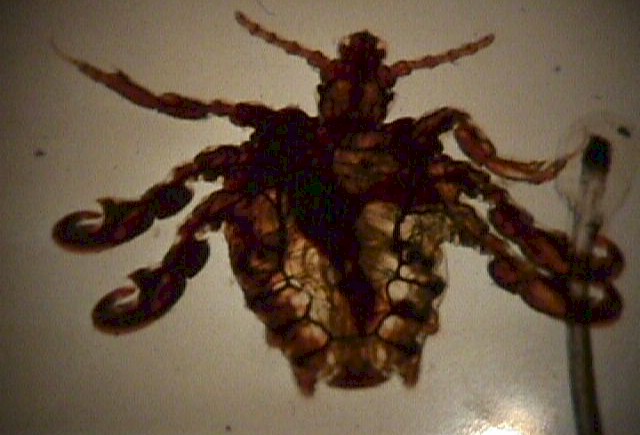 Pubic lice (pediculosis pubis) is caused by the infestation of the pubic
hair and skin by tiny organisms that are just at the limits of visibility without
magnification.
Pubic lice (pediculosis pubis) is caused by the infestation of the pubic
hair and skin by tiny organisms that are just at the limits of visibility without
magnification.
Pubic lice can be spread through sexual contact, close living quarters, or shared clothing.
The patient will described moderately intense itching and may say, "I think I see something moving down there."
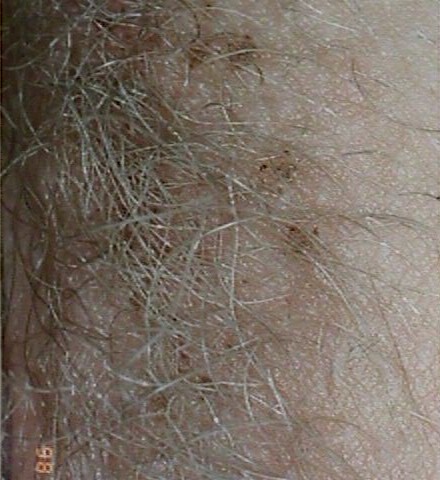
 Ideally, the patient is examined with good lighting and a magnifying lens. The lice can
be seen moving along the shafts of the pubic hair. Individual "nits" can be
seen. These are small, oval, gray eggs attached to the hairs. Brown discolorations of the
skin, when closely examined, are seen to contain lice excrement deposited just beneath the
skin.
Ideally, the patient is examined with good lighting and a magnifying lens. The lice can
be seen moving along the shafts of the pubic hair. Individual "nits" can be
seen. These are small, oval, gray eggs attached to the hairs. Brown discolorations of the
skin, when closely examined, are seen to contain lice excrement deposited just beneath the
skin.
Without magnification, the brown spots can be seen, but most noticeable is the movement of the lice.
Treatment may include:
- Nix cream (5% permethrin) applied to the vulvar skin and left in place for 6-12 hours before washing off.
-
 Kwell lotion or shampoo (1% lindane) once after showering and left in place for 10
minutes before rinsing. This may be repeated in 7 days if necessary. Do not use more often
or longer than this as lindane has neurotoxicity potential.
Kwell lotion or shampoo (1% lindane) once after showering and left in place for 10
minutes before rinsing. This may be repeated in 7 days if necessary. Do not use more often
or longer than this as lindane has neurotoxicity potential. - Mechanically removing nits and lice by combing the pubic hair with a fine toothed comb.
- Clothing and bed linens should be thoroughly washed and dried. Mattresses should be aired or vacuumed. Sources of cross-contamination (shared clothing, towels) eliminated. Sexual contacts should be treated.
If conventional medication is not available, petroleum jelly, applied to the affected area may prove effective by suffocating the lice.
Home · Introduction · Medical Support of Women in Field Environments · The Prisoner of War Experience · Routine Care · Pap Smears · Human Papilloma Virus · Contraception · Birth Control Pills · Vulvar Disease · Vaginal Discharge · Abnormal Bleeding · Menstrual Problems · Abdominal Pain · Urination Problems · Menopause · Breast Problems · Sexual Assault · Normal Pregnancy · Abnormal Pregnancy · Normal Labor and Delivery · Problems During Labor and Delivery · Care of the Newborn
|
Bureau of Medicine
and Surgery |
Operational
Obstetrics & Gynecology - 2nd Edition |
This web version of Operational Obstetrics & Gynecology is provided by The Brookside Associates Medical Education Division. It contains original contents from the official US Navy NAVMEDPUB 6300-2C, but has been reformatted for web access and includes advertising and links that were not present in the original version. This web version has not been approved by the Department of the Navy or the Department of Defense. The presence of any advertising on these pages does not constitute an endorsement of that product or service by either the Department of Defense or the Brookside Associates. The Brookside Associates is a private organization, not affiliated with the United States Department of Defense. All material in this version is unclassified.
This formatting © 2006
Medical Education Division,
Brookside Associates, Ltd.
All rights reserved