|
|
|

Operational Obstetrics & Gynecology
Labor and Delivery
Watch a Video Showing a Normal Delivery or Cesarean Section
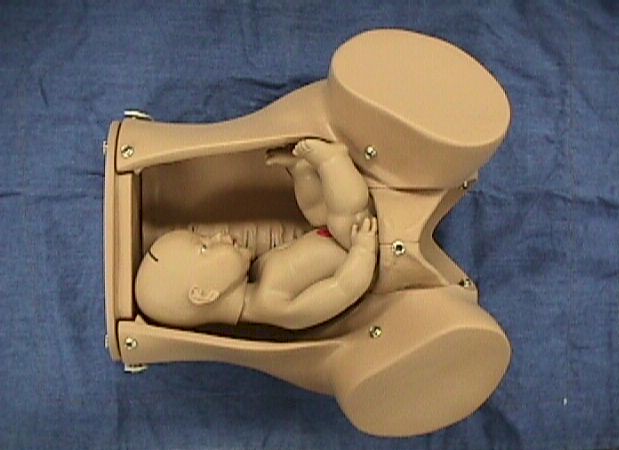
By abdominal and pelvic examination, determine the orientation of the fetus.
There are basically 3 alternatives:
-
Cephalic (head first, or vertex)
-
Breech (butt or feet coming first)
-
Transverse lie (side-to-side orientation, with the fetal head on one side and the butt on the other)
Most of the time, the fetus will be head first (vertex).
The easiest way for a relatively inexperienced examiner to determine this presentation is by pelvic exam. The fetal head is hard and bony, while the fetal butt is soft everywhere except right over the fetal pelvic bones.
 |
 |
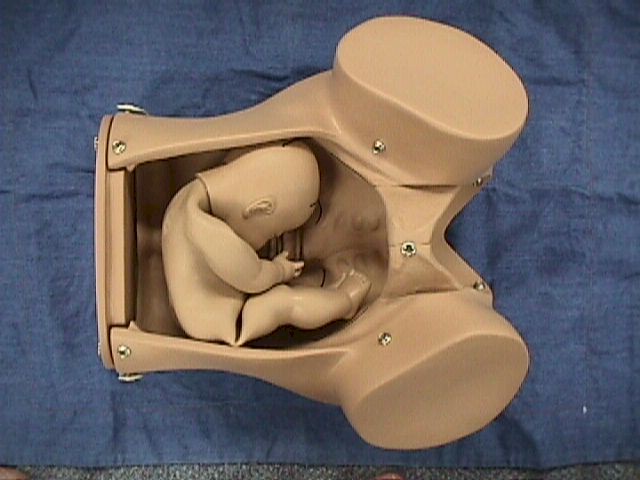 |
When the baby is presenting butt first, the presenting part is very soft, but with hard areas within it (sacrum and ischial tuberosities).
If one or both feet are presenting first, you will feel them.
If you don't feel any presenting part (head or butt) on pelvic exam, there is a good chance the baby is in transverse lie (or oblique lie). Then things get a little more complicated.
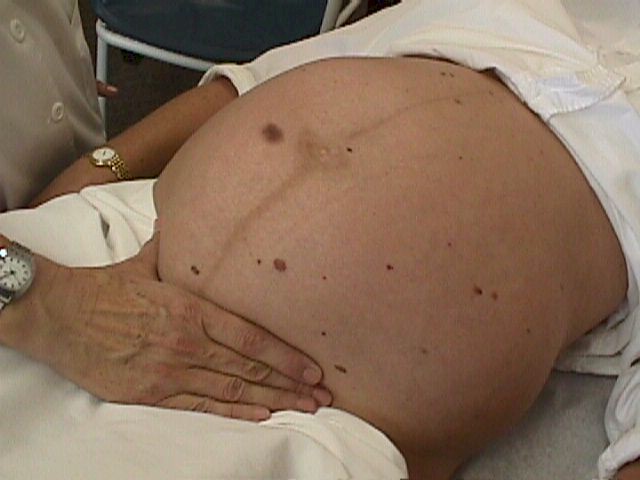
Transverse lie or oblique lie can be suspected if the fundal height measurement is less than expected and if on abdominal exam, the basic orientation of the fetus is side-to-side.
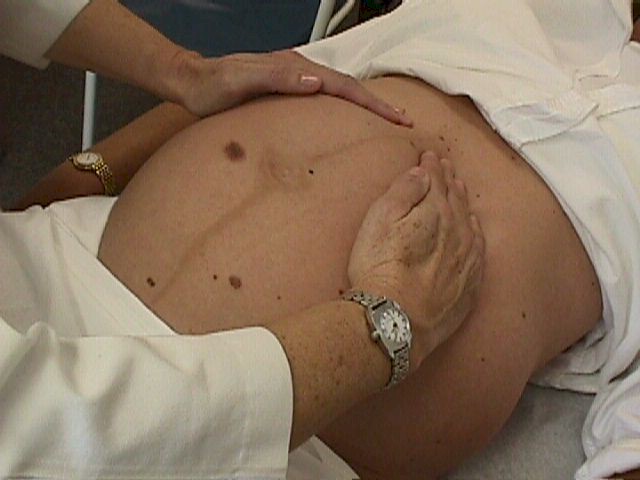
More experienced examiners can tell much from an abdominal exam.
Making a "V" with their thumb and index finger and pressing down just above the pubic bone, they can usually feel the hard fetal head at the pelvic inlet.
Home · Introduction · Medical Support of Women in Field Environments · The Prisoner of War Experience · Routine Care · Pap Smears · Human Papilloma Virus · Contraception · Birth Control Pills · Vulvar Disease · Vaginal Discharge · Abnormal Bleeding · Menstrual Problems · Abdominal Pain · Urination Problems · Menopause · Breast Problems · Sexual Assault · Normal Pregnancy · Abnormal Pregnancy · Normal Labor and Delivery · Problems During Labor and Delivery · Care of the Newborn
|
Bureau of Medicine
and Surgery |
Operational
Obstetrics & Gynecology - 2nd Edition |
This web version of Operational Obstetrics & Gynecology is provided by The Brookside Associates Medical Education Division. It contains original contents from the official US Navy NAVMEDPUB 6300-2C, but has been reformatted for web access and includes advertising and links that were not present in the original version. This web version has not been approved by the Department of the Navy or the Department of Defense. The presence of any advertising on these pages does not constitute an endorsement of that product or service by either the Department of Defense or the Brookside Associates. The Brookside Associates is a private organization, not affiliated with the United States Department of Defense. All material in this version is unclassified.
This formatting © 2006
Medical Education Division,
Brookside Associates, Ltd.
All rights reserved