|
|
|

Operational Obstetrics & Gynecology
Labor and Delivery
Immediately after delivery of the baby, the placenta is still attached inside the uterus. Some time after delivery, the placenta will detach from the uterus and then be expelled. This process is called the "3rd stage of labor" and may take just a few minutes or as long as an hour.
Signs that the placenta is beginning to separate include:
-
A sudden gush of blood
-
Lengthening of the visible portion of the umbilical cord.
-
The uterus, which is usually soft and flat immediately after delivery, becomes round and firm.
-
The uterus, the top of which is usually about half-way between the pubic bone and the umbilicus, seems to enlarge and approach the umbilicus.
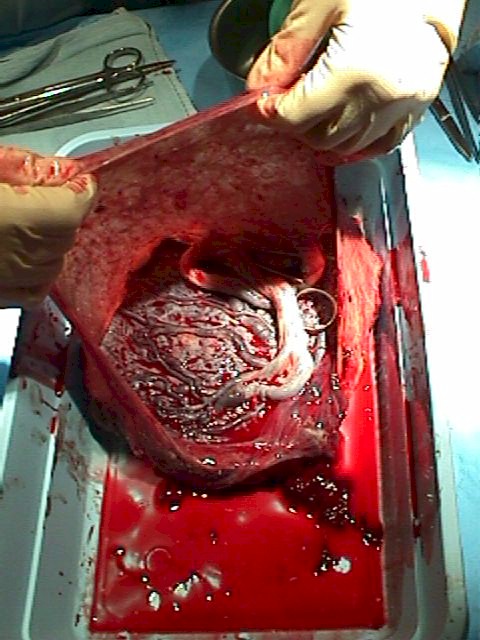
Immediately after the delivery of the baby, uterine contractions stop and labor pains go away. As the placenta separates, the woman will again feel painful uterine cramps. As the placenta descends through the birth canal, she will again feel the urge to bear down and will push out the placenta.
Home · Introduction · Medical Support of Women in Field Environments · The Prisoner of War Experience · Routine Care · Pap Smears · Human Papilloma Virus · Contraception · Birth Control Pills · Vulvar Disease · Vaginal Discharge · Abnormal Bleeding · Menstrual Problems · Abdominal Pain · Urination Problems · Menopause · Breast Problems · Sexual Assault · Normal Pregnancy · Abnormal Pregnancy · Normal Labor and Delivery · Problems During Labor and Delivery · Care of the Newborn
|
Bureau of Medicine
and Surgery |
Operational
Obstetrics & Gynecology - 2nd Edition |
This web version of Operational Obstetrics & Gynecology is provided by The Brookside Associates Medical Education Division. It contains original contents from the official US Navy NAVMEDPUB 6300-2C, but has been reformatted for web access and includes advertising and links that were not present in the original version. This web version has not been approved by the Department of the Navy or the Department of Defense. The presence of any advertising on these pages does not constitute an endorsement of that product or service by either the Department of Defense or the Brookside Associates. The Brookside Associates is a private organization, not affiliated with the United States Department of Defense. All material in this version is unclassified.
This formatting © 2006
Medical Education Division,
Brookside Associates, Ltd.
All rights reserved